The best hay for miniature horses is clean, low-sugar grass hay fed by weight in carefully measured amounts. Minis may be pint-sized, but their appetites and their health risks are not. Because they’re such easy keepers, the real challenge isn’t finding fancy hay — it’s feeding the right hay in the right quantity so your mini stays trim and sound.
Why Miniature Horses Gain Weight So Easily
Miniature horses are famous easy keepers. They evolved and were bred to thrive on modest forage, so they hold weight on far less feed than a full-size horse needs. Left with unlimited rich hay or lush pasture, most minis will happily eat themselves into trouble.
That trouble is serious. Minis are prone to obesity, and obesity opens the door to laminitis, a painful and sometimes crippling hoof condition. They’re also at risk of hyperlipemia, a dangerous metabolic problem that can strike an overweight mini that suddenly goes off its feed. Because of all this, controlled, low-sugar forage isn’t a nice-to-have for miniature horses — it’s the heart of keeping them healthy.
The Best Hay for Miniature Horses: Clean Grass Hay
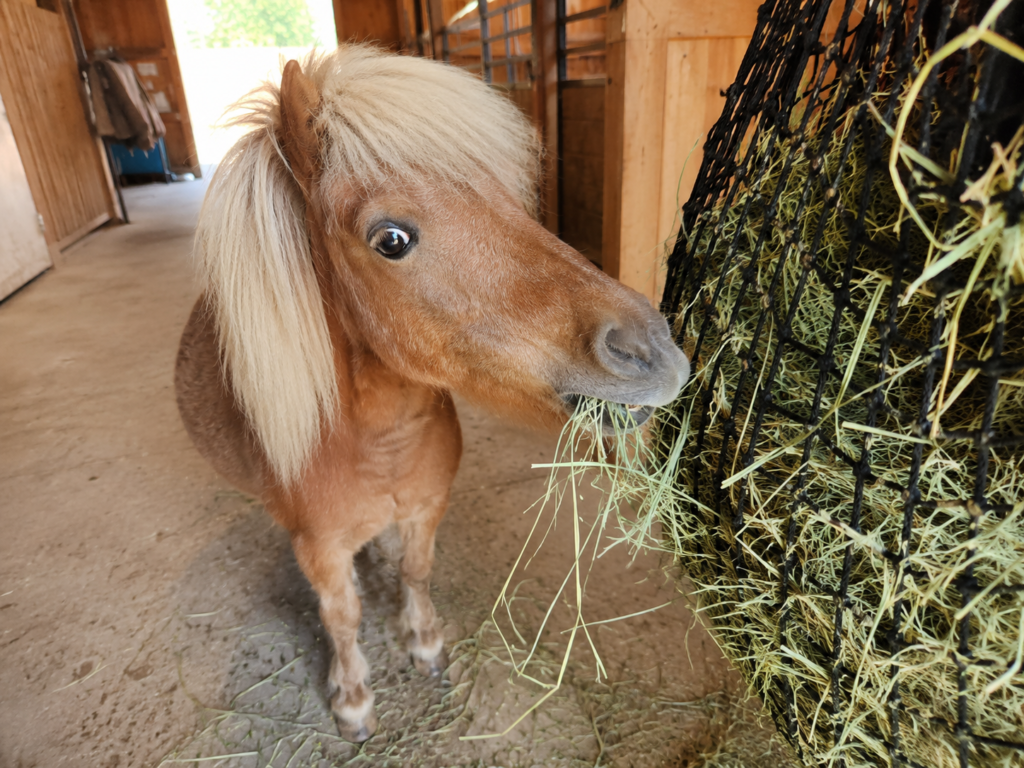
For most minis, the foundation should be clean, mature grass hay. Grass hay is high in fiber and moderate in energy, which is exactly what an easy keeper needs to stay busy chewing without loading up on calories.
Two grass hays work well and are easy to find across New York:
- Timothy hay: The classic horse hay — palatable, consistent, and lower in calories than legume hay. A safe everyday choice for minis. See what’s listed on our timothy hay page.
- Orchard grass hay: Soft, leafy, and very palatable, a good option if your mini is picky. Its energy can run a touch higher than timothy depending on cutting, so watch the amount.
- Mature grass hay generally: Coarser, later-cut grass hay carries more fiber and less sugar, which suits weight-prone minis well.
Whatever the type, clean beats fancy every time. Look for a sweet, fresh smell, green or golden color, and plenty of leaf, and avoid anything musty, gray inside, damp, or dusty. Minis have sensitive airways, and dust and mold spores are a leading trigger of equine respiratory problems. If you also keep a full-size horse, the same quality rules apply — our guide to the best hay for horses covers judging hay quality in more depth.
Hay to Avoid: Alfalfa and Lush, Rich Hay
For the average healthy mini, alfalfa is usually too much. Alfalfa is a legume, not a grass, and it’s packed with protein, calcium, and calories. That makes it valuable for hard-working, growing, or nursing horses, but for an easy-keeping mini it’s a fast route to unwanted weight.
The same caution applies to very lush, rich hay and young, sugar-heavy second cuttings. Second cutting is typically leafier, softer, and higher in sugar and energy than a mature first cutting, which is exactly the wrong profile for a weight-prone mini. There are exceptions: a growing foal, a nursing mini mare, or an underweight rescue may genuinely need richer forage for a time. But those are special cases, best managed with your vet. For a healthy adult mini holding good condition, low-sugar grass hay does the job — and the difference between the right hay and the wrong hay is often the difference between a sound mini and a laminitic one.
Feed by Weight, Not by the Flake
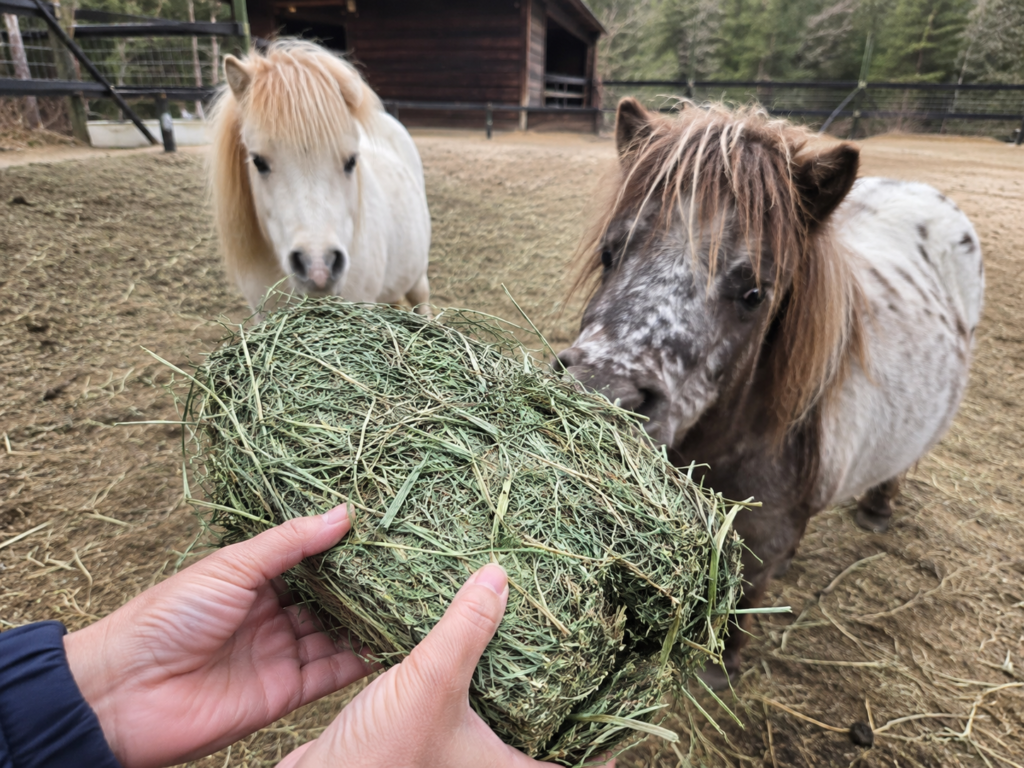
This is the single most important habit with miniature horses. Minis are so small that feeding by the flake or the armful almost guarantees overfeeding. A flake of hay can weigh several pounds — a meaningful chunk of a mini’s entire daily ration.
As a general starting point, feed roughly 1.5% of body weight in hay per day, adjusted for body condition. Do the math for your animal:
- A 250-pound mini at 1.5% needs only about 3.75 pounds of hay a day.
- Compare that to a 1,000-pound horse, which eats around 15 to 20 pounds daily.
- That mini eats roughly a quarter of what a full-size horse does — a small target that’s easy to overshoot.
Treat these figures as starting estimates, not firm rules; every mini is different. The takeaway is simple: put the hay on a scale. Guessing by eye almost always means feeding too much. Our guide on how much hay a horse needs explains the weight-based method that applies to minis just as much as to big horses — you’re only scaling the numbers down.
Slow-Feed Nets and Soaking: Stretching a Small Ration
The trouble with feeding a mini so little is that it can vanish in minutes, leaving your horse bored and standing around with an empty stomach for hours. That’s hard on the gut and the mind. Two tools help.
A slow-feed hay net with small holes stretches a controlled amount of hay across many hours. Your mini has to work for each bite, which mimics natural grazing, keeps it occupied, and supports steady digestion — all without adding a single extra ounce of feed.
Soaking hay in cool water for 30 to 60 minutes before feeding can lower its sugar (and dust) content, a common management step for metabolic and laminitis-prone animals. Rutgers equine specialists and other extension programs note that soaking reduces water-soluble carbohydrates in hay, though the exact drop varies batch to batch. For a mini with metabolic concerns, that can be a helpful tool — used under veterinary guidance, alongside a hay analysis when possible, so you actually know what you’re feeding.
When to Loop In Your Vet
Because minis are so prone to obesity, laminitis, and hyperlipemia, health-sensitive feeding decisions should involve your veterinarian. If your mini is overweight, showing any sign of laminitis, or has a diagnosed metabolic condition, don’t design the diet alone. A vet can set a safe target weight, guide a gradual weight-loss plan, and help you avoid the fast feed cuts that can trigger hyperlipemia. We give solid general guidance here, but your vet knows the animal in front of you.
Feeding Minis Without the Weight
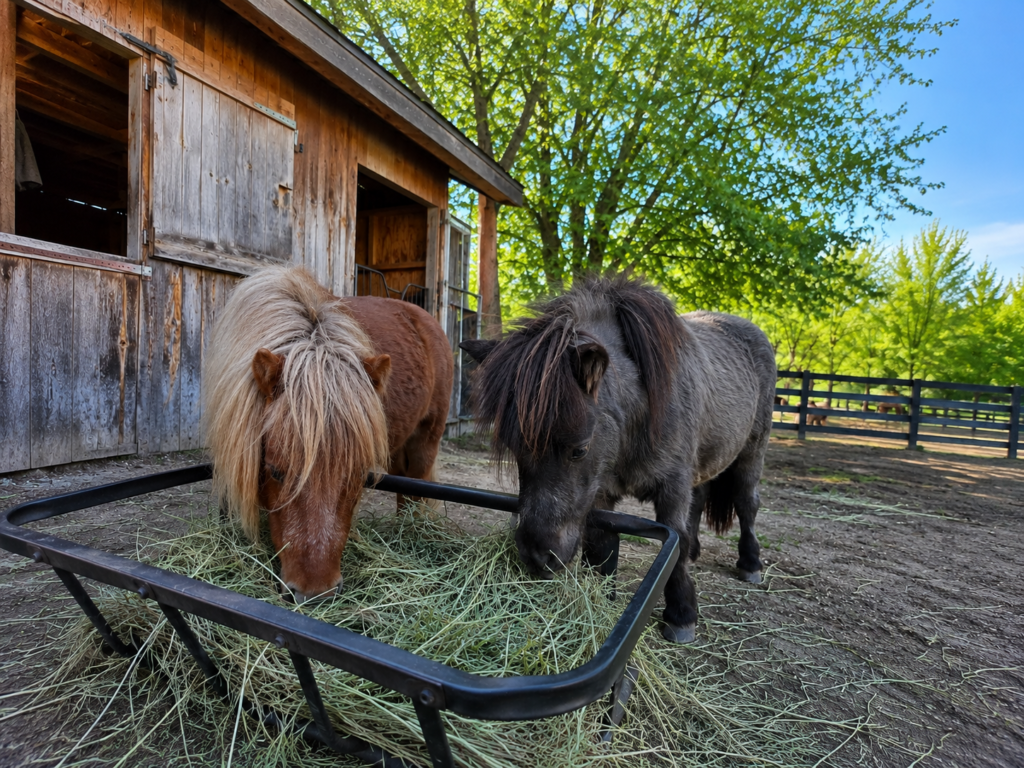
The best hay for miniature horses is clean, low-sugar grass hay — timothy, orchard grass, or a mature grass hay — fed by weight rather than by the flake, at roughly 1.5% of body weight. Skip the alfalfa and lush rich hay for most minis, use a slow-feed net to stretch a controlled ration, soak hay when sugar is a concern, and lean on your vet for any metabolic case. Do that, and your mini stays trim, busy, and sound.
Ready to find the right forage from local New York growers? Browse current listings on our hay for sale page or explore options picked for equine feeding on the horse hay category. The right hay, in the right amount, is the best thing you can do for a miniature horse.
This guide is part of our complete guide to the best hay for every animal.
Ready to buy? Browse hay for miniature horses for sale in New York from local farms on Empire State Haymarket.


