The best hay for alpacas is a clean, moderate- to lower-protein grass hay such as timothy, orchard grass, or a good mixed-grass blend. Alpacas and llamas are camelids — efficient eaters that get plenty out of ordinary forage, so rich, high-protein hay and heavy alfalfa usually cause more problems than they solve. Get the type and amount right and you keep your herd in good condition through a New York winter without wasting money on hay they do not need.
This guide covers which hays suit camelids, when a legume like alfalfa actually earns its place, how much to feed, and how to judge quality before you buy. For anything tied to a specific animal’s health or body condition, loop in your vet or local extension office.
Why Grass Hay Is the Right Base for Camelids
Alpacas and llamas evolved on the sparse grasses of the South American highlands. That history shows up in how they eat today. They are what farmers call easy keepers — they pull more nutrition out of a given amount of forage than a horse or a cow would, and they hold weight on feed that would leave other stock thin.
So the goal with camelids is usually restraint, not richness. A quality grass hay gives them the fiber their three-compartment stomach needs to work properly, at a protein level that keeps them healthy without pushing them toward unwanted weight. For most alpacas and llamas most of the year, grass hay running roughly 8% to 12% protein is a sensible target.
Good everyday choices across New York include:
- Timothy hay — a reliable, moderate-protein grass hay that camelids handle well and that is widely available from NY growers.
- Orchard grass hay — soft, leafy, and palatable, a good option for older animals or picky eaters.
- Mixed-grass hay — often the best value, and a clean blend of local grasses suits most healthy herds just fine.
What matters more than the exact species is that the hay is well-made. A stemmy, weathered timothy bale is worse feed than a leafy, sweet mixed-grass one. Judge the bale in front of you, not just the label.
Go Easy on Alfalfa and High-Protein Hay
Alfalfa is a legume, not a grass, and it is richer than grass hay across the board — more protein, more calcium, more energy per pound. For camelids, that richness is usually a downside rather than a benefit. Fed heavily to healthy adult alpacas and llamas, high-protein hay can drive unwanted weight gain and has been linked to other issues you would rather avoid.
That does not make legume hay useless. It means you save it for the animals that genuinely need the extra nutrition, such as:
- Crias — young, growing animals that use the added protein to build frame.
- Pregnant females in late gestation, when the growing offspring raises demand.
- Nursing females supporting milk production.
- Thin or recovering animals a vet has flagged as needing to gain condition.
Even then, most keepers do not switch these animals fully to alfalfa. They keep grass hay as the base and add a measured amount of legume as a top-up, then back off once the extra need passes. When you are dealing with pregnancy, growth, or a thin animal, that is exactly the moment to check feeding with your vet rather than guessing. Penn State Extension offers solid general guidance on llama and alpaca nutrition if you want to read further.
How Much Hay Do Alpacas and Llamas Need?
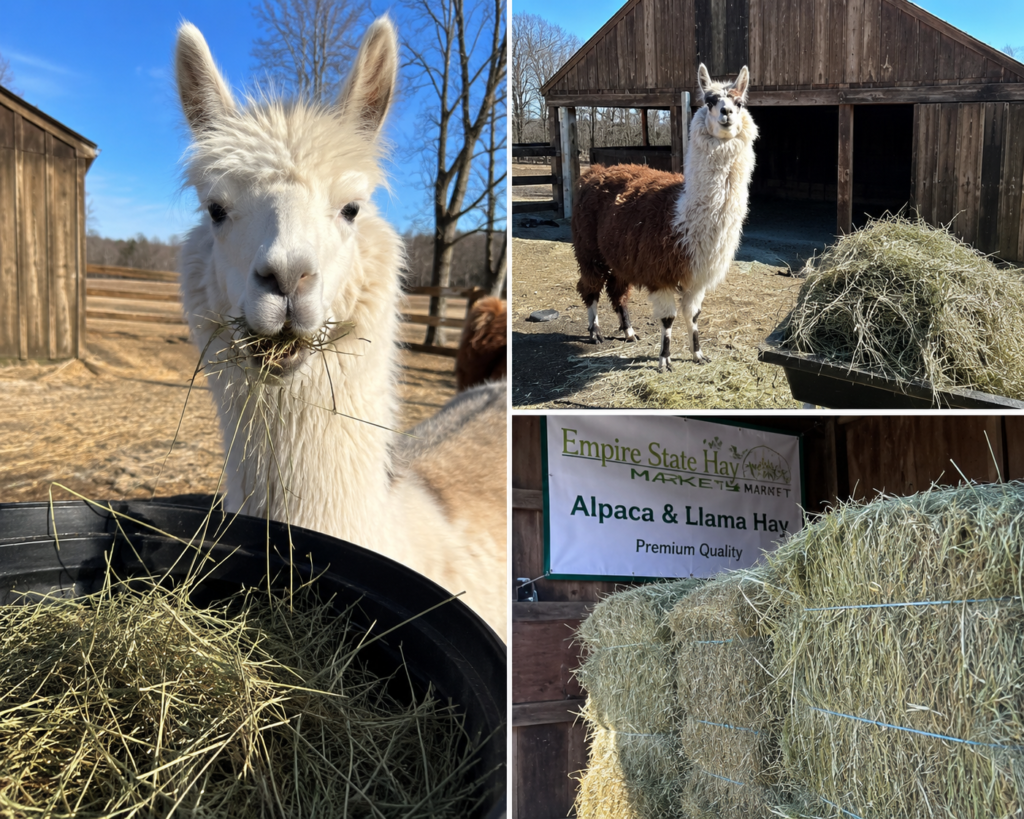
A useful rule of thumb is to feed roughly 1.5% to 2% of body weight in hay per day. For a 150-pound alpaca, that works out to about 2 to 3 pounds of hay daily. A full-grown llama can weigh 300 pounds or more, so scale up accordingly — think 5 to 6 pounds a day for a 300-pound animal.
Treat those figures as starting points, not firm quotes. The right amount shifts with the animal’s age, workload, whether it is pregnant or nursing, and how good your pasture is in a given season. The honest test is body condition: run your hands over the animal regularly and adjust up or down based on what you feel, not just what the scale says.
New York winters change the math. When pasture dies back and temperatures drop, camelids burn more energy just staying warm, and that heat comes largely from fermenting fiber in the gut. So plan on feeding more grass hay through the cold months — free-choice grass hay is a common and sensible approach for a NY winter. More grass hay, not richer hay, is the point: you want to fuel warmth with fiber, not pack on weight with protein.
Do Fiber Animals Still Need Good Forage?
Yes. It is easy to assume that because alpacas and llamas eat so efficiently, quality does not matter much. The opposite is true. These are fiber animals, and the condition of their fleece tracks closely with the quality of their nutrition. Skimpy or moldy hay shows up eventually in the coat, the body condition, and the vet bills.
Efficient does not mean indestructible. Camelids still need clean, consistent forage to keep their gut working and their fiber growing well. Feeding cheap, dusty hay to “save money” on an easy keeper usually costs more in the end.
How to Judge Hay Quality Before You Buy
The good news is that hay quality is knowable. You do not need a lab to spot a good bale — you need your eyes, your nose, and your hands. Look for hay that is:
- Green and leafy, not bleached, yellow, or stemmy. Leaves hold most of the nutrition, and camelids eat them more readily.
- Sweet-smelling, never musty or sour. A moldy smell means it belongs on the compost pile, not in the feeder.
- Dry and free of mold and dust. Dust and mold are hard on camelid lungs and can trigger respiratory trouble.
- Clean of weeds and debris. Ask the grower about the field and the cutting.
Buying from a nearby New York grower makes this easier. You can inspect the bales in person, ask which cutting it is, and skip the trucking cost of hauling hay in from out of state. Local hay is also cured for our regional climate, which tends to mean a more consistent product for your herd. If you want a broader primer on matching forage to animals, our guide to the types of hay lays out the main options, and goat keepers running mixed small-stock herds may find our notes on the best hay for goats useful too, since the grass-first logic is similar.
Feeding Camelids Well in New York
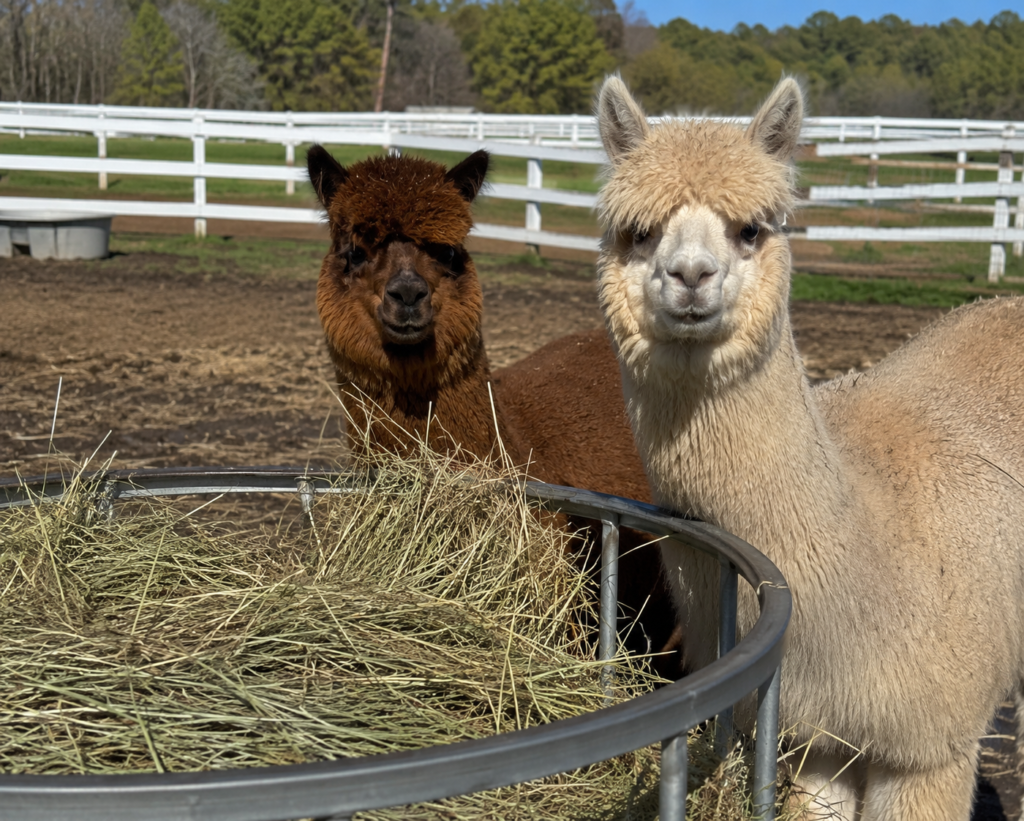
The short version: build your camelid feeding program around clean, moderate-protein grass hay, feed roughly 1.5% to 2% of body weight a day, lean on more grass hay through a cold NY winter, and save alfalfa for the crias, pregnant, and nursing animals that truly need it. Judge every bale on quality, and let body condition — checked by hand and confirmed with your vet — guide your adjustments.
Ready to stock up? Browse hay for sale from growers near you across New York, compare timothy, orchard grass, and mixed-grass listings by type and price, or post a hay wanted request and let local sellers come to you. Buying direct from a NY grower means fresher hay, no broker markup, and a shorter haul home.
This guide is part of our complete guide to the best hay for every animal.
Ready to buy? Browse hay for alpacas & llamas for sale in New York from local farms on Empire State Haymarket.


