
The best hay for chickens is really a question about bedding and coop comfort, not diet — chickens are omnivores and do not eat hay as a primary feed. What hay and straw do well is line nesting boxes, insulate a cold coop, and give your flock something to scratch through on a long New York winter day. This guide walks through when to reach for straw versus hay, how to use each around the coop, and the moisture problems to watch for.
If you keep a backyard flock in New York, getting your bedding right saves you money, cuts down on smell, and keeps your birds healthier through our long cold season. Let’s sort out what actually belongs in the coop.
Do Chickens Eat Hay? Not Really
First, clear up the common mix-up. Chickens are omnivores built to eat grains, seeds, bugs, and kitchen scraps — not long forage like a horse or goat does. They cannot digest large amounts of hay, and long strands are a genuine hazard, so hay is not a feed for your flock. Their nutrition should come from a balanced layer or grower ration plus whatever they forage on their own.
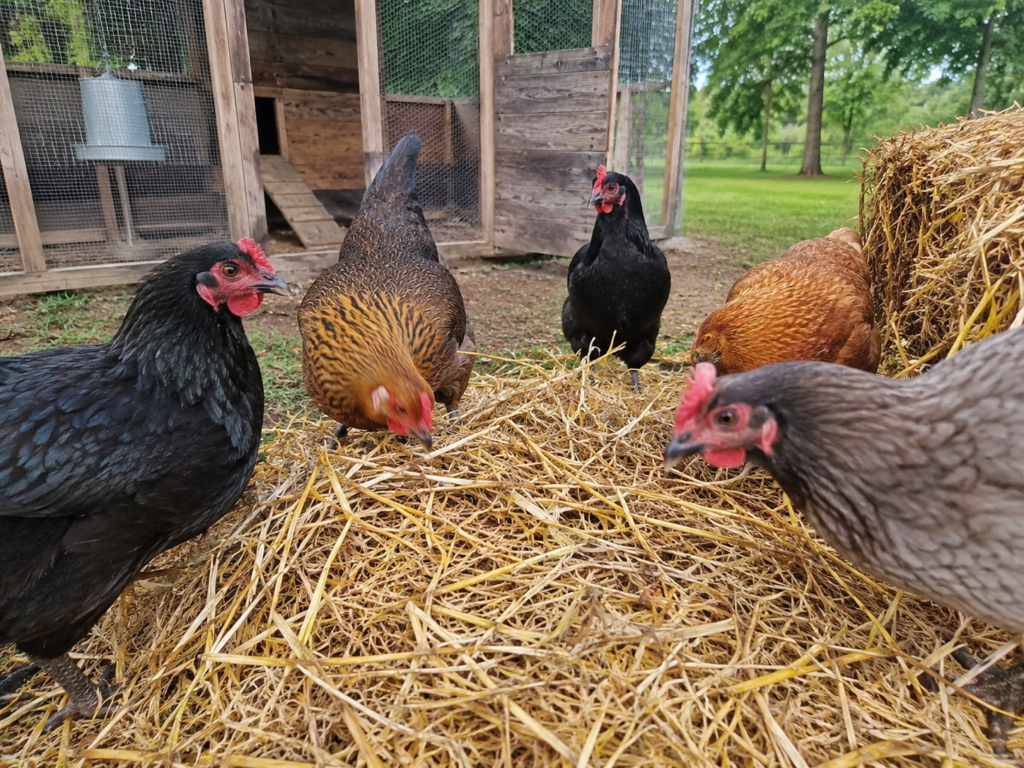
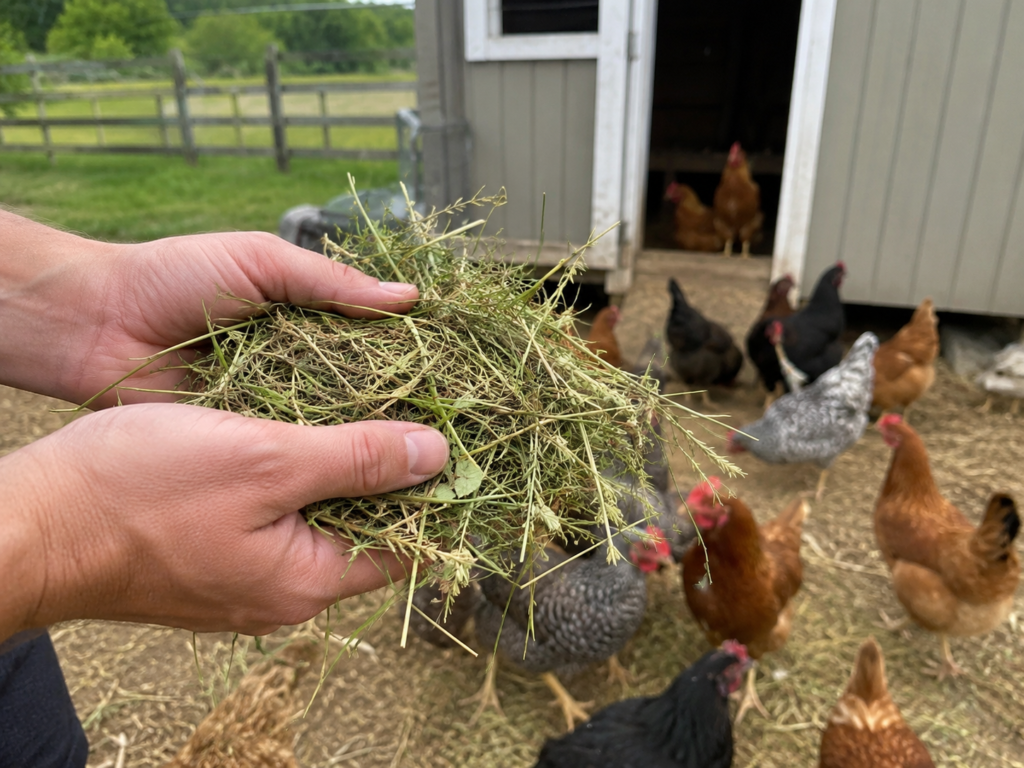
That said, chickens will happily pick through a flake of hay. They pull out seeds, nibble the softest leaves, and hunt the bugs hiding inside. That makes hay useful as enrichment and bedding — just not as a meal. Keep the good feed in the feeder and think of hay and straw as tools for the coop, not the diet.
Straw vs. Hay: Which Belongs in the Coop?
For most coop jobs, straw is the better and cheaper choice. Straw is the hollow, dried stalk left after grain like wheat or oats is harvested — the seed heads are already gone. Those hollow stems make it light, springy, and absorbent, and because it carries far less moisture and few seeds, it is less prone to molding than hay in a closed coop.
Hay, by contrast, is a cured forage grass grown and baled for feed. It holds more moisture and leafy material, which is exactly what you want for feeding animals — and exactly what you do not want packed into a humid coop, where it mats down and molds faster. Hay also usually costs more, since it is a feed crop.
Here is the simple split:
- Use straw for everyday bedding and nesting boxes. It is absorbent, affordable, and holds up well under the deep-litter method.
- Use hay sparingly, for cold-weather insulation, occasional nesting, and scratch-and-forage enrichment.
If you want a fuller breakdown of the difference between these two, our guide on straw vs. hay spells it out. For bedding, most New York flock keepers land on straw as their main choice.
Using Straw for Bedding and Nesting Boxes
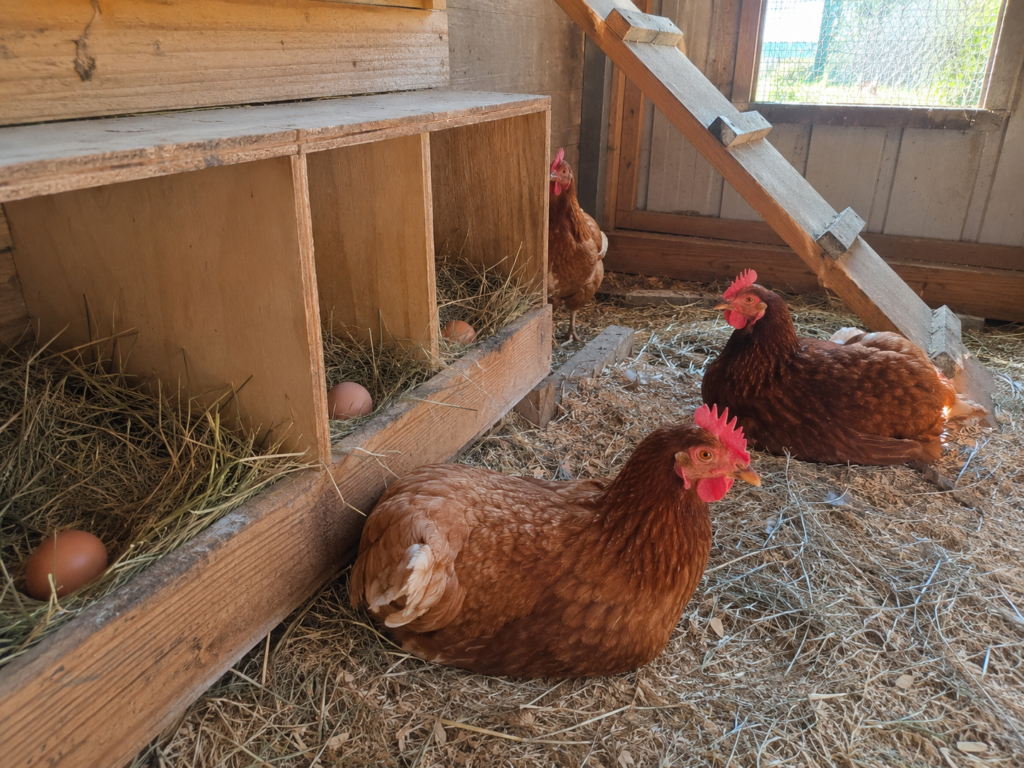
Straw shines as coop bedding. It cushions the floor, absorbs droppings and spilled water, and gives birds a dry surface to walk on. In nesting boxes, a handful of clean straw makes a soft, inviting spot that helps keep eggs clean and unbroken.
Many keepers use straw with the deep-litter method: you start with a base layer, add fresh straw on top as it gets soiled instead of stripping it all out, and let the bedding slowly compost in place over the winter. Done right, it cuts your workload, adds a little warmth as the lower layers break down, and gives you rich compost come spring. The catch is that it only works if the litter stays dry and gets turned or topped regularly — wet, packed litter is where trouble starts.
When Hay Helps: Winter Warmth and Enrichment
Hay is not useless around the coop — it just plays a smaller role. In the depths of a New York winter, a layer of hay can add insulation and help hold coop warmth, and birds will burrow and nestle into it on bitter nights. A flake tossed into the run also makes great enrichment: chickens will spend hours scratching through it for seeds and bugs, which keeps them busy and cuts down on boredom pecking during the months they are stuck inside more.
One caution with feeding-style hay use: do not offer large amounts of long hay strands. Chickens that gorge on long, tough strands can face crop impaction, where the material balls up and blocks the crop. Chopped bits, seed heads, and short leafy pieces they pick apart are fine; a big wad of long stems is asking for trouble. When in doubt, keep hay as something they scratch through, not something they gulp down.
The Real Danger: Damp, Moldy Bedding
The single biggest risk with hay or straw in a coop is moisture. A New York winter coop is often humid — birds breathe, droppings pile up, and closed-up ventilation traps the damp. Hay and straw that get wet in that environment mold quickly, and mold is hard on a chicken’s respiratory system. Birds have delicate lungs and air sacs, and moldy bedding can trigger serious respiratory illness.
So the rule is simple: keep bedding dry and refresh it often. A few habits go a long way:
- Keep the coop ventilated even in winter — stale, damp air is worse than a little cold.
- Fix leaks and spills fast. Wet spots under waterers are the first place mold shows up.
- Refresh soiled or damp bedding promptly instead of letting it sit and mat.
- Store your bales dry and off the ground so they are clean and mold-free before they ever reach the coop.
That last point matters more than people think — bedding that molds in storage is already ruined before you spread it. Our guide on how to store hay covers keeping bales dry, and the same principles apply to straw. For deeper reading on flock housing and health, your state land-grant program is a solid resource; Cornell’s poultry extension offers research-backed guidance for New York keepers.
Setting Up Your Coop the Right Way
To sum it up: chickens do not eat hay as feed, so treat hay and straw as bedding and coop tools. Reach for straw as your everyday bedding and nesting material — it is cheaper, more absorbent, and less mold-prone. Use hay in smaller doses for winter insulation and foraging enrichment, skip large amounts of long strands, and above all keep everything dry, because damp, moldy bedding is the fastest way to make a flock sick.
Setting up or restocking your coop for the season? Browse hay and straw for sale from growers near you across New York, and steer toward local straw listings for your bedding needs. Buying direct from a NY farm means a fresher, drier bale and a shorter haul — or post a hay wanted request and let nearby sellers bring the straw to you.
This guide is part of our complete guide to the best hay for every animal.
Ready to buy? Browse hay for chickens for sale in New York from local farms on Empire State Haymarket.


