Finding the best hay for sheep starts with a simple idea: match the hay to what your flock is doing right now. A good-quality grass or grass-legume hay is the foundation for most sheep, but ewes in late pregnancy, nursing ewes, and growing lambs all need a step up in quality. This guide covers what to feed your flock, how much they eat, and how to judge hay quality here in New York.
What Makes Good Hay for Sheep
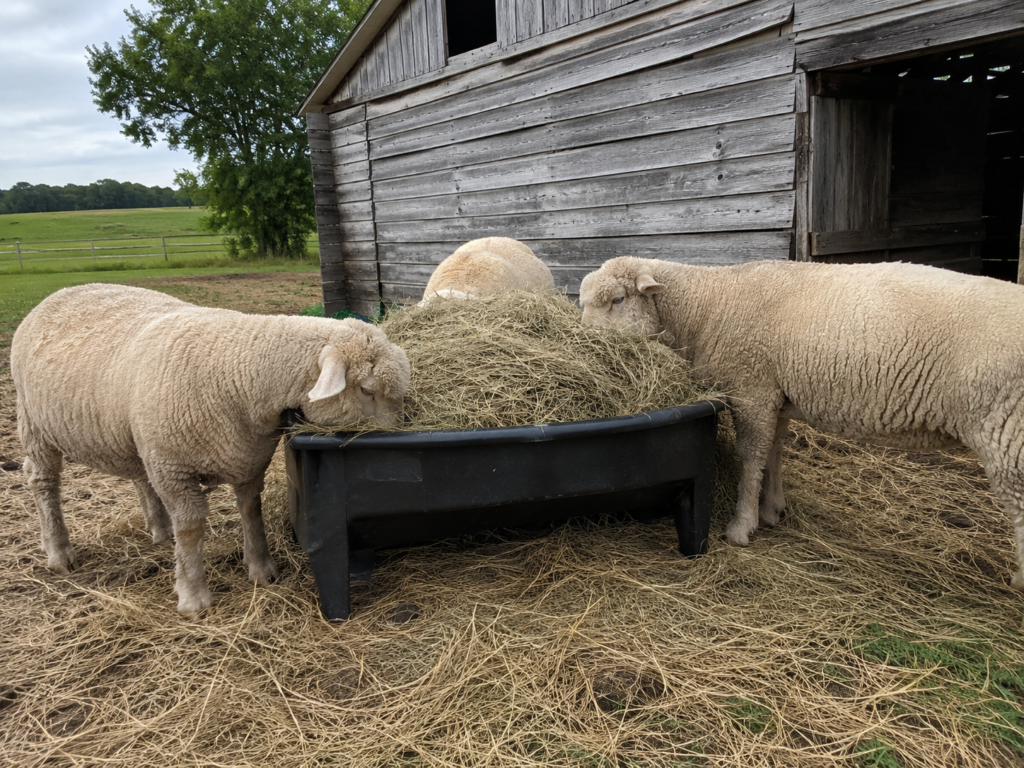
Sheep are moderate eaters that do well on clean, leafy forage. The base of most flock diets is a decent grass hay — timothy, orchardgrass, brome, or a mix. For sheep with higher needs, a grass-legume hay adds the protein and energy those animals require.
Whatever type you choose, quality is what separates hay your sheep thrive on from hay they waste. Look for hay that is:
- Green and leafy — good color and plenty of leaf mean more nutrition and better palatability.
- Sweet-smelling and dry — a fresh, sweet smell tells you it was cured and stored right.
- Free of mold and dust — sheep have sensitive respiratory systems, and moldy or dusty hay causes problems and gets refused.
- Fine-stemmed — softer hay suits sheep better than coarse, mature, stemmy bales.
When you can, open a bale and check it yourself before buying. Buying from a nearby grower makes that easy and saves on trucking, since hay is heavy and freight adds up fast on a load hauled in from out of state.
Best Hay for Maintenance Ewes
A dry ewe who is not pregnant or nursing — often called a maintenance ewe — has modest needs. For most of the year, a good grass hay does the job just fine. You do not need to pay a premium for the leafiest, highest-protein bales to keep a maintenance ewe in good condition.
This is where a solid timothy hay or a mixed-grass hay earns its keep. Both are palatable, widely available across NY, and priced right for feeding a flock through the quieter parts of the year. As long as the hay is clean, green, and mold-free, maintenance ewes will hold their weight on it.
The goal for these animals is steady body condition, not rapid gain. Overfeeding rich, high-protein hay to idle ewes is a way to waste money and, in some cases, push animals to over-condition. Save the premium hay for the animals that actually need it.
Best Hay for Late-Gestation Ewes, Nursing Ewes, and Lambs
The story changes fast when a ewe is carrying lambs or milking. In late gestation, she is growing lambs and running out of room to eat much at once, so the hay she does eat needs to be more nutrient-dense. After lambing, a nursing ewe’s needs jump again to support milk production.
For these animals, reach for leafier, higher-protein hay — an earlier-cut grass hay or a grass-legume mix. A touch of legume like alfalfa or clover lifts the protein and energy without much bulk, which helps when a heavily pregnant ewe simply cannot eat a lot of coarse hay. Growing lambs need the same kind of quality to put on frame.
According to Cornell Cooperative Extension, a ewe’s nutritional needs rise sharply in the last four to six weeks of pregnancy, which is exactly when underfeeding causes the most trouble. You can find NY-specific flock guidance through Cornell’s Sheep Program. Because late gestation and lactation are health-sensitive windows, it is worth checking your feeding plan with your veterinarian or extension agent.
How Much Hay Does a Sheep Eat?
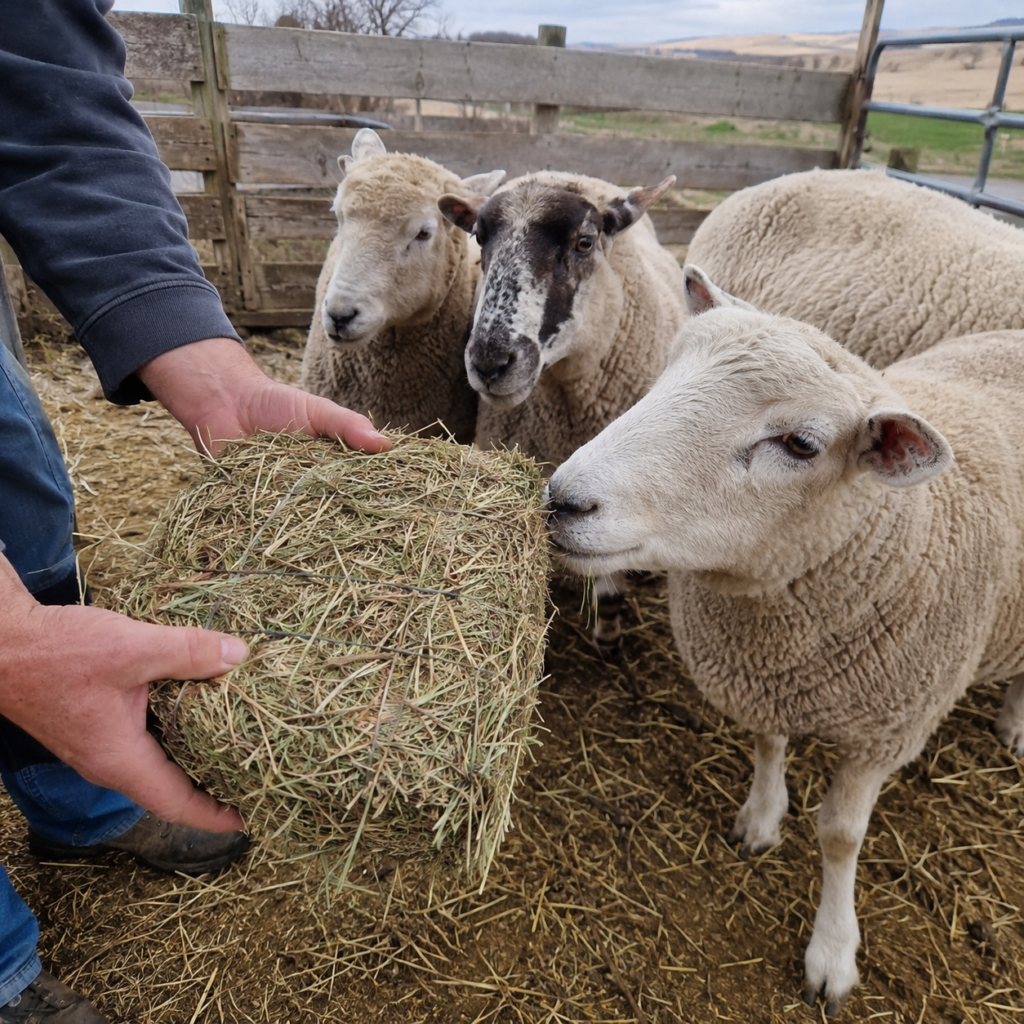
Sheep eat roughly 2% to 3% of their body weight in dry matter per day. For a typical ewe, that lands somewhere around 2 to 4 pounds of hay a day, depending on her size and stage. Maintenance ewes sit at the low end; late-pregnant and nursing ewes climb toward the top of that range and beyond.
New York’s cold snaps push the number up too. Sheep burn extra energy staying warm, so they eat more hay in a hard freeze than they do on a mild day. Plan your winter supply with that in mind, and give the flock a little cushion rather than running your barn down to the last bale.
To turn a daily feeding rate into a season’s supply, it helps to know what your bales weigh. A small square can range widely, so ask the seller for the actual weight when you buy. From there, multiply your flock’s daily intake across the months pasture is gone and you will have a solid estimate of how much to buy.
Judging Hay Quality Before You Buy
With sheep, clean hay is not a nice-to-have — it is the difference between a healthy flock and refused, wasted forage. Before you buy, run through a quick check:
- Color: Green, not yellow or gray. Bleached hay has usually lost feed value.
- Leaf-to-stem: Plenty of leaf, not all coarse stems. Leaves carry the nutrition.
- Smell: Sweet and fresh. A musty or sour smell means mold — walk away.
- Dust and mold: Break a bale open and look. Dust and white spots are red flags for sheep.
- Moisture: Dry to the touch. Hay baled too wet heats, molds, and loses quality.
Quality beats a low price every time here. A cheap bale your sheep pick through and waste costs more in the end than good hay they clean up. When in doubt, don’t feed it — a little wasted hay is cheaper than a vet bill.
A Quick Note on Sheep and Copper
One sheep-specific point worth knowing: sheep are sensitive to copper, and too much of it can build up and become toxic. This is a mineral supplement issue, not a hay issue — the concern is feeding minerals or feeds formulated for other species, like goats or cattle, that carry more copper than sheep can safely handle.
The simple habit is to use a mineral supplement labeled specifically for sheep, and to avoid sharing another species’ feed with your flock. Because copper needs and tolerances vary with your soil, water, and forage, this is a good thing to confirm with your veterinarian or extension office rather than guessing. Your hay itself is not the worry — it is what goes in the mineral feeder alongside it.
Feeding Your Flock Through a New York Winter
NY winters are long, and pasture is gone for months, so hay carries your flock from late fall into spring. Buy ahead. Late-winter hay can get scarce and expensive once local barns run low, so stocking up close to harvest protects both your budget and your sheep.
Buying local is the smart move. A nearby NY grower saves you on trucking, often has fresher hay suited to our climate, and lets you inspect the bales in person before you commit. It also builds a relationship you can lean on again next season.
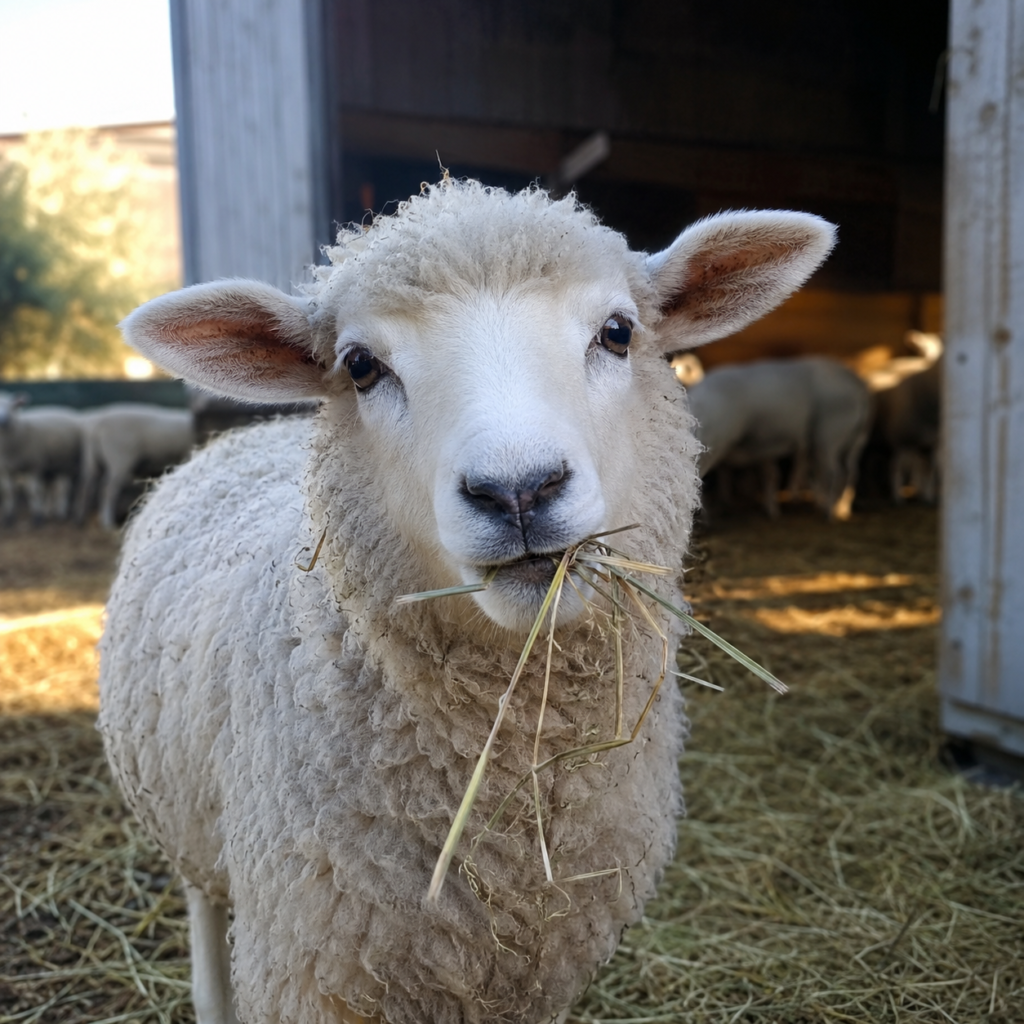
Finding the Best Hay for Your Sheep
There is no single best hay for sheep — there is the right hay for the animals in your barn. Good grass or grass-legume hay is the base, maintenance ewes do fine on clean grass hay, and late-gestation ewes, nursing ewes, and growing lambs need leafier, higher-protein bales. Judge quality yourself, feed for the stage, and keep the mineral feeder sheep-specific. Keeping goats too? Our guide to the best hay for goats covers their needs side by side.
Ready to fill the barn? Browse local listings for hay for sale from growers across New York, or post a hay wanted request and let nearby sellers come to you. Buy direct, buy local, and keep your flock well fed all winter.
This guide is part of our complete guide to the best hay for every animal.
Ready to buy? Browse hay for sheep for sale in New York from local farms on Empire State Haymarket.